
Partnership to Advance Data Sovereignty
ASPPH values the opportunity to work alongside Tribal Nations as they advance their public health priorities, including strengthening Tribal public health infrastructure, advancing data sovereignty, and improving access to the public health data needed to protect and improve community health. As part of this commitment, ASPPH is offering legal technical assistance free of charge to Tribal Nations seeking to access their public health data from state or local jurisdictions.
Tribal Nations have the sovereign right to generate, access, govern, and use data to protect the health and well-being of their communities.

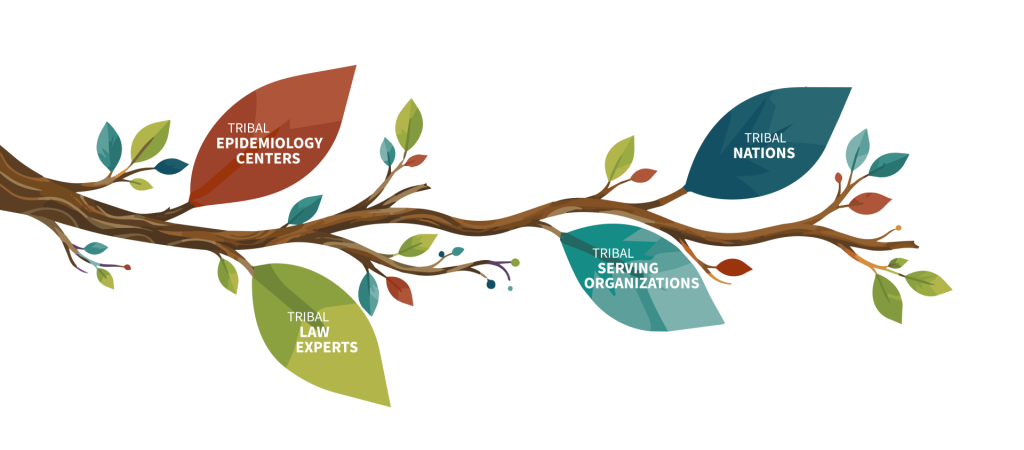
Tribal Nations have always conducted their own research, generated their own knowledge and data, and exercised stewardship over information about their citizens, lands, and communities. Building on this longstanding tradition of Tribal-led research and data stewardship, Tribal Serving Organizations and Tribal Epidemiology Centers have played a critical role in supporting Tribal Nations’ capacity to access, analyze, interpret, and use public health data, including data collected by state and local public health jurisdictions, while advancing Tribal data sovereignty and strengthening Tribal public health infrastructure. Aligning with these efforts, ASPPH is partnering with Tribal Epidemiology Centers, Tribal Law Experts, Tribal Serving Organizations, and Tribal Nations to assist them in addressing barriers to accessing their public health data collected and managed by state and local public health jurisdictions.

“Too often, people don’t realize that data sovereignty is an extension of Tribal sovereignty. Every agreement involving Tribal data should answer fundamental questions: Who owns the data? Who can use it? Why is it being used? And what happens to it when the work is complete? Data sharing agreements give Tribes the legal protections and authority to answer those questions on their own terms while preserving their autonomy and protecting their communities.”
Lydia Locklear Canty (Lumbee Tribe of North Carolina), Partner, Current Tribal Law & Policy, PLLC

“Throughout my work, one question has remained constant: Who owns the data, and who gets to tell the story? I believe Tribal Nations should be the ones guiding those decisions. Data sharing agreements and Tribal data governance are more than administrative tools—they are ways to protect what is sacred, preserve our sovereignty, and ensure our communities continue to thrive.”
Chris Tall Bear (Southern Cheyenne), Tribal Public Health Advisor, National Network of Public Health Institutes

“For state and local entities working with Tribal Nations, trust is key. Build a relationship with the Tribe. Show them you follow through on your commitments. Maintain regular communication on the work and dedicate time, staff, and resources. In negotiating language, do not let the perfect be the enemy of the good. Discuss intent of language and what both parties can agree upon, be realistic and do not overcommit, and recognize the progress that has been made. Come to the table understanding Tribal sovereignty and the differences in a government-to-government relationship versus a local and state jurisdiction relationship.”
Amanda Tjemsland (Jamestown S’Klallam Tribe), Senior Tribal Epidemiologist, Washington State Department of Health

“Health systems across communities, including Tribal, vary widely in infrastructure, capacity and needs. Access to accurate and timely data is foundational to effective public health, empowering local systems to tailor strategies to the unique characteristics of their populations and surrounding communities. Persistent challenges include limited access to population-specific data, misclassification, underreporting, and cumbersome, time-consuming data request processes. These barriers impact the ability of communities to have the necessary and complete data to inform meaningful public health actions. Overcoming these challenges requires intentional collaboration, trust-building, and implementing DUAs and DSAs to memorialize data-sharing processes that respect community autonomy and data governance. All health systems are critical partners for health and public health.”
Stephen Weaver, Tribal Liaison, Oklahoma State Department of Health
Tribal Epidemiology Centers
In partnership with Tribal Epidemiology Centers, ASPPH polled Center directors in 2025 to better understand where federally recognized Tribal Nations may have the potential to access public health data through data access and use agreements between state public health jurisdictions and Tribal Epidemiology Centers. The poll documented the reported existence of these agreements and identified opportunities to expand data access and use agreements that support Tribal data sovereignty.
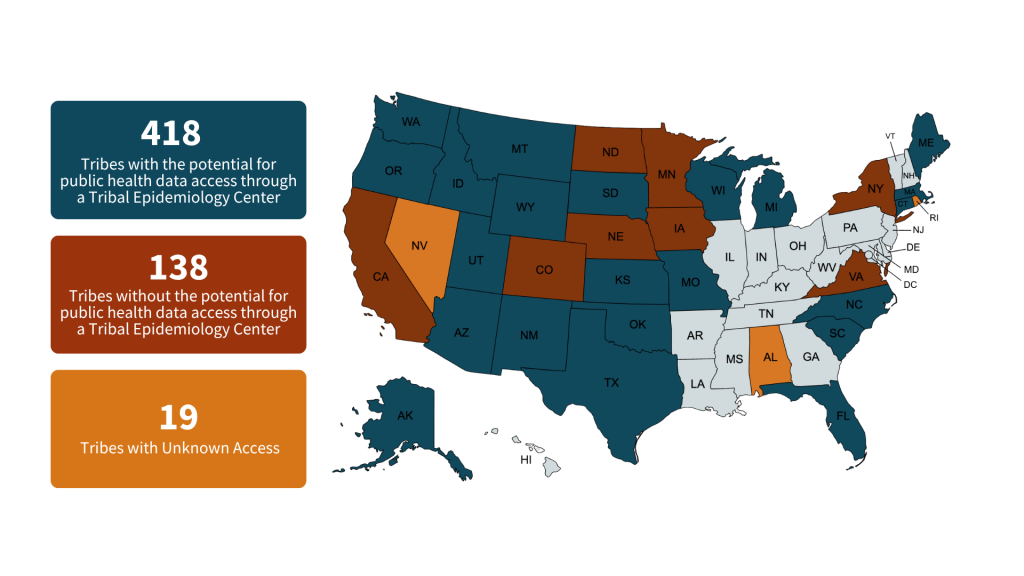
The map summarizes poll results from Tribal Epidemiology Center directors on the existence of data access and use agreements between Tribal Epidemiology Centers and state public health jurisdictions. These findings indicate where formal agreements may provide a foundation for Tribal access to public health data. They do not indicate whether data are actively exchanged, what types of data are shared, or the scope, quality, or frequency of data sharing under these agreements. Instead, the map establishes a baseline understanding of where agreements exist and where opportunities remain to strengthen data-sharing partnerships.

“COVID made it clear just how important Tribal access to data really is. We know the data exists, but the challenge is having the agreements, expertise, and capacity to access it, interpret it, and put it to work for our communities. Every Tribe should be exercising its sovereign right to establish data use agreements now, so those tools are already in place when they’re needed”
Will Funmaker (Ho-Chunk Nation), Director, Great Lakes Inter-Tribal Epidemiology Center
Tribal Serving Organizations
For decades, Tribal Serving Organizations have led efforts to advance Tribal data sovereignty by developing policies, tools, guidance, and technical assistance that help Tribal Nations access, govern, protect, and use their data. Through this work, Tribal Nations have access to a growing body of resources that support Tribal research, data governance, data sharing, and stewardship.
Working alongside Tribal Serving Organizations, Tribal Law Experts, and the ASPPH Advisory Collaborative, ASPPH identified and compiled many of these resources for ease of access and use.
Tribal Law Experts
Through a partnership with the Native American Law Practice at Kaplan Kirsch LLP, ASPPH is offering legal technical assistance free of charge to federally recognized Tribal Nations seeking to access their public health data collected and managed by state and local public health jurisdictions. Kaplan Kirsch attorneys bring extensive experience in Tribal sovereignty, federal Indian law, Tribal governance, and Tribal–state relationships, providing technical assistance that supports Tribal Nations as they navigate data access challenges and strengthen Tribal governance over public health data.
Working alongside Tribal Nations, Tribal Serving Organizations, Tribal Epidemiology Centers, and an Advisory Collaborative of Tribal public health and data governance experts, ASPPH and Kaplan Kirsch developed the Data Access & Use Toolkit to Support Tribal Public Health to complement existing Tribal data sovereignty resources and provide practical tools for Tribal Nations.
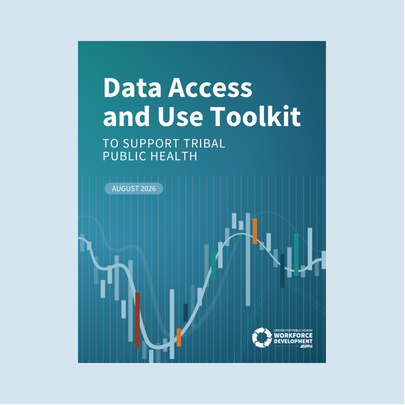
The Toolkit includes:
- Model Tribal Data Sharing Code and Implementation Guide
- Curated collection of Tribal data sovereignty and data-sharing resources
- Information about legal technical assistance free of charge for federally recognized Tribes

Apsáalooke Nation (Crow Tribe of Montana)
Partner

Ione Band of Miwok Indians
Partner

Habematolel Pomo of Upper Lake
Associate
Tribal Nations
Tribal law experts are working alongside federally recognized Tribes to provide no-cost legal technical assistance on Tribal public health data governance and data sharing priorities. This collaborative work includes strengthening Tribal legal and policy frameworks, supporting intergovernmental data sharing efforts, and addressing complex legal and operational challenges related to accessing and using public health data. Check back soon to hear directly from participating Tribal partners about their experiences and the value of these partnerships.
ASPPH CENTER FOR PUBLIC HEALTH WORKFORCE DEVELOPMENT
The ASPPH Center for Public Health Workforce Development is committed to serving as a trusted partner and ally to Tribal Nations by supporting Tribal priorities, respecting Tribal sovereignty, and fostering meaningful collaboration. Through its Tribal health initiatives, the Center is working to strengthen connections between Tribal Nations and academic public health, helping to elevate Tribal leadership, advance Indigenous public health approaches, and support efforts to Indigenize and decolonize academic public health. Through partnerships with Tribal Nations, Tribal Serving Organizations, Tribal Epidemiology Centers, and schools and programs of public health, initiatives such as the ASPPH/CDC Tribal Health Department Fellowship Program and the CDC-funded Tribal Public Health Data Access and Use Project strengthen Tribal public health systems while creating reciprocal opportunities for learning, workforce development, and long-term partnership.
ASPPH ADVISORY COLLABORATIVE
The Advisory Collaborative is composed of representatives from Tribal Nations, Tribal Epidemiology Centers, Tribal Serving Organizations, Tribal partner organizations, and Tribal law experts who provide strategic and technical guidance throughout ASPPH’s Guidance To Accelerate Tribal Public Health Data Access and Use Project. Together, they help identify barriers to accessing Tribal public health data collected and managed by state and local public health jurisdictions, guide the development of legal and policy resources, review project deliverables, and ensure the project advances Tribal priorities and Tribal data sovereignty.

A.C. Locklear II, JD – Chair, Advisory Collaborative
Chief Executive Officer
National Indian Health Board

Michell Barrows
Health Director
Maliseet Health and Wellness Center

Will Funmaker, MBA, MLT (ASCP)CM
Director
Great Lakes Inter-Tribal Epidemiology Center

Jessica Imotichey, MPH
Health Policy and Legislative Analyst
Chickasaw Nation Department of Health

Lydia Locklear Canty, JD
Tribal Law Subject Matter Expert

Stephanie Russo Carroll, DrPH, MPH
Associate Director, Native Nations Institute, Udall Center, The University of Arizona; Director, Collaboratory for Indigenous Data Governance

Rev. Bobby Saunkeah, RN, MSHCE, CIP
Manager of Research and Population Health
Chickasaw Nation Department of Health
Chris Tall Bear, MLS
Tribal Public Health Advisor
National Coordinating Center for Public Health Training
National Network of Public Health Institutes
Amanda Tjemsland, MPH
Senior Tribal Epidemiologist
Washington State Department of Health
Stephen Weaver, MPA
Tribal Liaison
Oklahoma State Department of Health
Funding for this project is provided through PW-24-0080 Strengthening Public Health Systems and Services through National Partnerships to Improve and Protect the Nation’s Health from the Centers for Disease Control and Prevention (CDC) of the Department of Health and Human Services (HHS) as part of financial assistance award no. NU38PW000021 awarded to the Association of Schools and Programs of Public Health (ASPPH). The contents are solely the responsibility of the authors and do not necessarily represent the official views of the CDC or HHS.