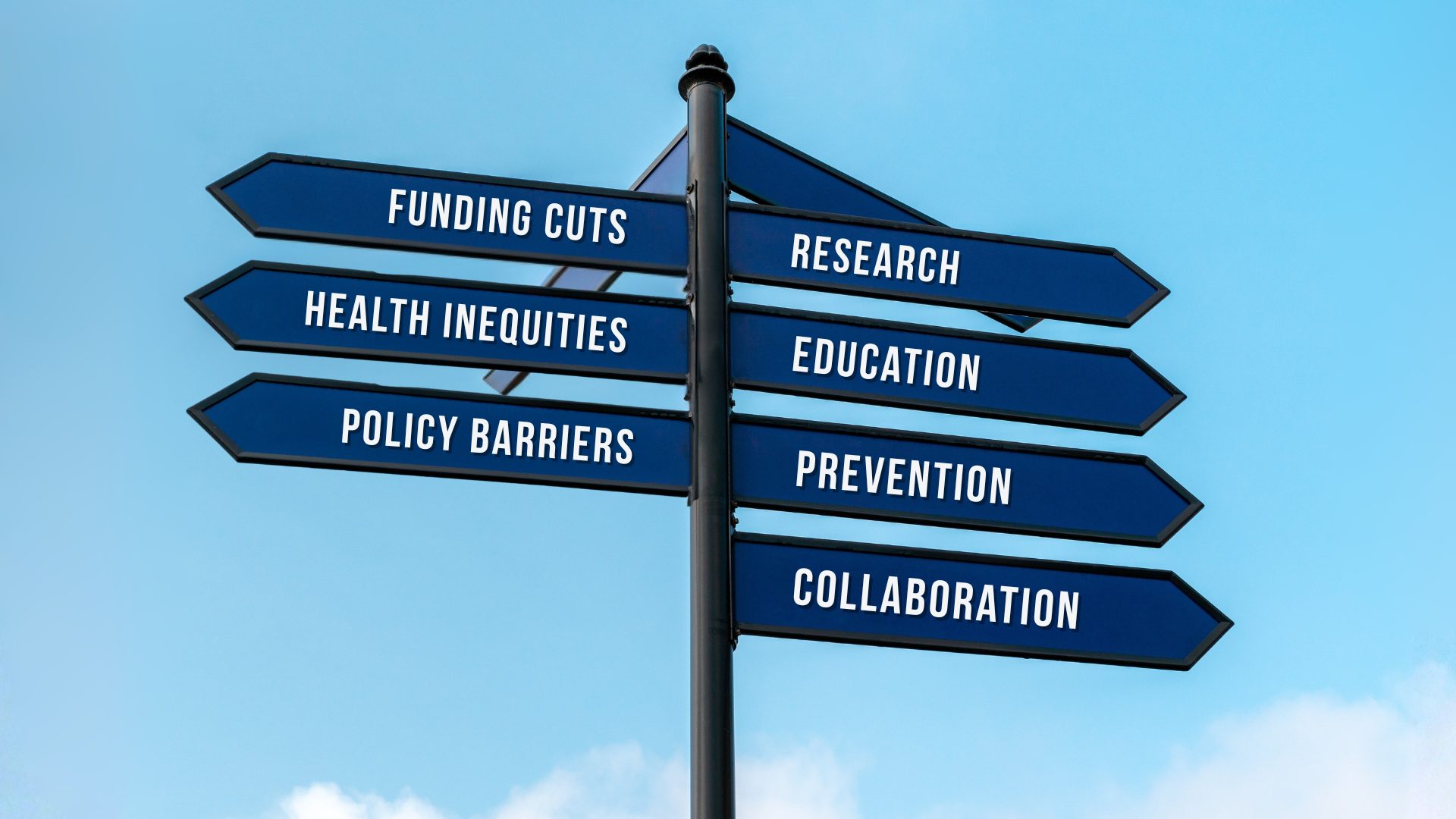
We are operating in a fundamentally different political environment than we were even a few years ago. We have seen a frontal attack on public health, funding cuts, and questioning public health recommendations and even an attempt to remove it from the list of “professional degrees.” That reality requires more than reflection; it requires direction. My goal is not to simply revisit the concept of the political determinants of health, but to begin charting a path forward for public health.
At the 2026 Association of Schools and Programs of Public Health (ASPPH) Annual Meeting for Academic Public Health, I spoke on the political determinants of health, building on the work of Daniel Dawes, JD, and his book The Political Determinants of Health, which underscores the importance of starting with an accurate diagnosis – recognizing that political decisions, not just individual choices, are often the root cause of health inequities. These decisions shape the social and environmental conditions that ultimately drive health outcomes.
Dawes reminds us that before we can act effectively, we must first understand the conditions in which we are operating. We need a clear-eyed assessment of where public health stands in this political landscape. We must understand how politics are determining what health issues are adequately addressed in our country. Only with that diagnosis can we build a system that is stronger, more agile, and better able to meet the needs of the American people.
A clear example of the political determinants of health is something many of us have worked on for a few years: eliminating Hepatitis C. We have a cure. Yet access to life-saving drugs remains limited because of cost and policy barriers. There is legislation in the Senate (Cure Hepatitis C Act, S1941) that could expand access, save lives, and even reduce overall spending by some $7 billion, according to the Congressional Budget Office, but it has stalled due to politics. One of the sticking points is the amount that would have to be spent upfront to realize these savings. That is not a failure of science or public health. It is a reflection of the political environment shaping health outcomes.
And that brings us to the present moment.
The current political context is extraordinarily challenging for public health, arguably the worst ever. But it is also clarifying. It forces us to be more strategic, more intentional, and more engaged.
We must:
- Listen carefully to those in positions of power – and to those we may disagree with (At the ASPPH meeting we included folks from the Make America Health Again movement in one of our plenary sessions)
- Identify where collaboration is possible and move forward
- Help the next generation learn about what public health is and why it is important for them and their communities.
- And be willing to challenge policies when necessary
Make no mistake—this is our moment.
None of us chooses the moment we are given in history. This may not be the moment we expected or hoped for. But it is the one we have. The question is whether we rise to meet it.
Public health is not separate from democracy; it is foundational to it. When we advocate for healthier communities, we are also strengthening the institutions and values that sustain democratic societies.
That places a clear responsibility on all of us in this field.
- We must be truth seekers at a time when truth is often distorted.
- We must be standard bearers for the values that public health represents.
- Let us strive to be the people our children believe we can be.
How we respond to this moment will define us. It will shape the future of public health and the legacy we leave behind.
As Daniel Dawes challenges us to do, this must be a continued effort to diagnose where public health stands today, where we want it to be in 5 years and in 50, and what we must do strategically and collectively to get there.
At ASPPH, we stand ready to collaborate with our members, community partners, government and industry to develop this vision for more impactful public health.
ASPPH Resources
ASPPH Advocacy Handbook (members only)