




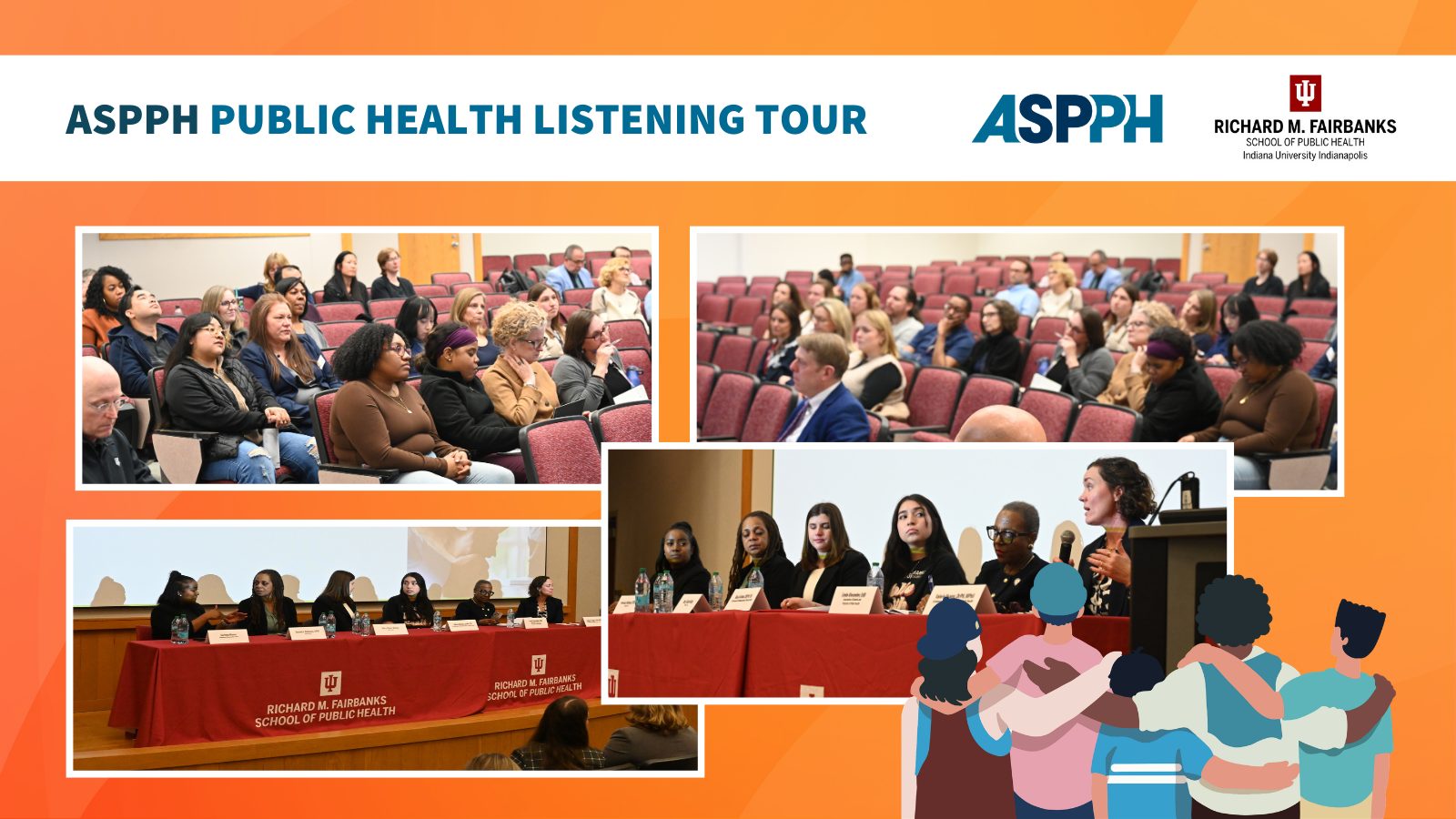
Last week, ASPPH convened Lessons from the Community: How Academic Public Health–Community Partnerships Make an Impact as part of its national Public Health Listening Tour. Hosted in partnership with the Indiana University Indianapolis Richard M. Fairbanks School of Public Health, the February 18 hybrid event brought together community leaders, students, faculty, and public health practitioners for a candid discussion on strengthening trust and advancing meaningful community-engaged work.
The conversation was moderated by Thomas J. Duszynski, PhD, MPH, Assistant Professor of Epidemiology at the Fairbanks School of Public Health. Panelists included Linda Alexander, EdD, Chief Academic Officer, ASPPH; Alexa Gomez, Bachelor of Science in Public Health student (’26); Veronica Holloway, CPSP, PEP Program Specialist, Step-Up, Inc.; Mary Claire Molloy, Health Reporter, Mirror Indy; Carlena Moses, Near West Community Builder, Hawthorne Community Center; and Valerie Yeager, DrPH, MPhil, Professor and Director of the Center for Health Policy at the Fairbanks School of Public Health.
A central theme of the discussion was accountability and community engagement. As the moderator noted in his opening remarks, “This interconnectedness, where academia doesn’t just study a community, but is accountable to the community, is the only way we will build the resilient, trustworthy systems that our public deserves. Real progress requires us to have the humility to listen to voices we don’t always hear.”
And Dr. Alexander stated, “Universities and schools of public health were not designed with community partnership in mind. Their structures, organizational models, and hierarchies often do not align with how communities operate or collaborate. If we had the opportunity to redesign the system, it would prioritize more equitable distribution of resources, greater appreciation of staff, and a structure that values community engagement as core.”
Insights from this Listening Tour stop will inform continued work on ASPPH’s Strategic Plan 2030, contributing to a broader national dialogue about how academic public health can become more responsive, trustworthy, and community-centered.
A recording of the event is available for those who were unable to attend.