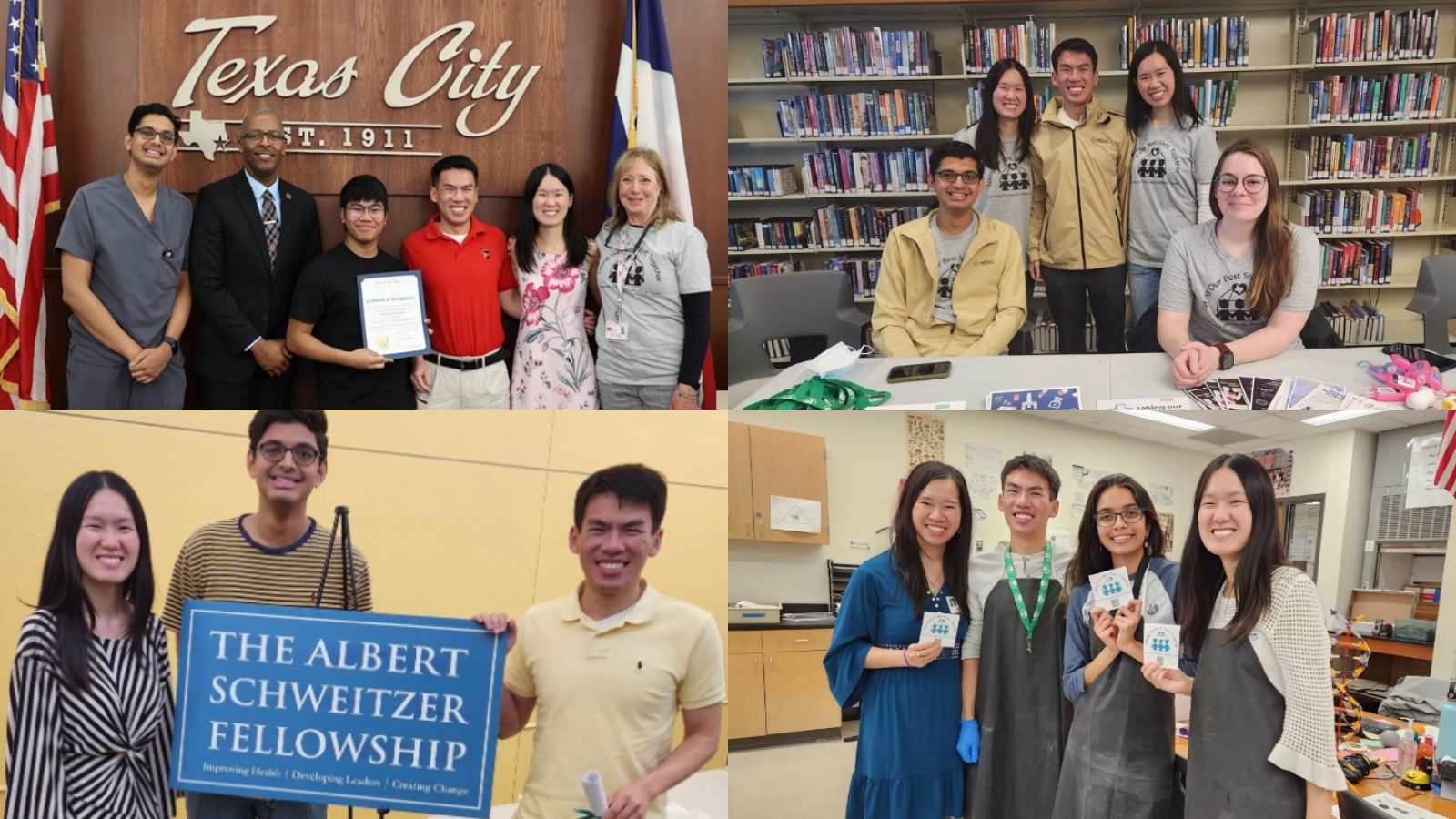
We are co-leads of Taking Our Best Shot (TOBS), an initiative dedicated to promoting public health and STEAM education in the community. Our team is comprised of individuals from a wide range of backgrounds, including public health, medicine, community and civic engagement, and more. We are motivated to help nurture the health of our society. Since our inception, we have evolved and expanded our scope and range of activities. For example, our team has built partnerships with libraries, schools, and community centers.
Below, we have included some of our activities and partnerships:
- Infographic Challenges: We implemented this program to engage high school students in building critical skills in understanding trustworthy science and health sources. This also strengthened their communication skills by translating complex findings and concepts into concise and informative infographics for the public.
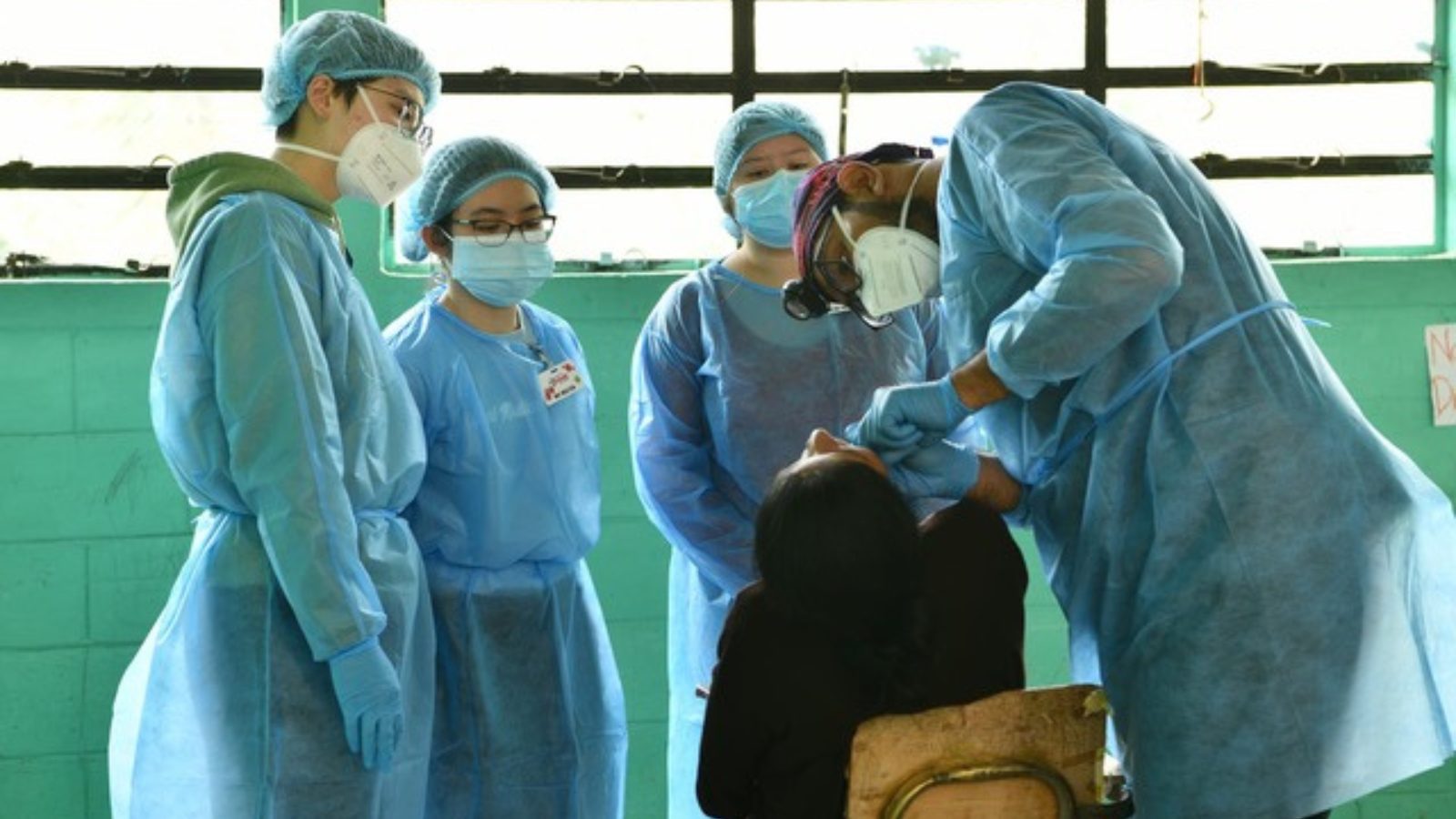
- Community and Health Fairs: We co-hosted or participated in multiple health fairs seeking to improve the community’s holistic health, facilitating attendees’ engagement with various resources.
- TOBS at Health Conversations: We established a health seminar series featuring speakers from the health and medical fields. This program provided community members with sources of health information in an informal setting (Moore Memorial Public Library in Texas City, Texas), and young professionals fostered their communication abilities in a public forum.
- TOBS at STEAM Paths: We led interactive discussions with students and empowered participants to succeed academically and enter STEAM careers.
- TOBS at OLLI Seminars: We launched a series of lectures on health topics with speakers from the health and medical fields. Hosted at the Osler Lifelong Learning Institute (OLLI) at The University of Texas Medical Branch (UTMB), this allowed young professionals and community members to hold vital discussions on health topics.
Community Impact
Our community learned more about public health and wellbeing, and audience members reflected on themes centered around various aspects of wellness, ranging from heart health to cancer to food safety.
Furthermore, students and young professionals gained valuable communication and public speaking skills. Our team drew upon these experiences when interacting with the public at community and health fairs. For example, some of the fairs were held at school campuses to promote the linkage between learning and health. We also learned about other community groups and forged further connections. For one health fair during the holiday season, an organization even cooked a delicious Southern-styled lunch!
Recognizing that a strong economy can strengthen the area’s health, we ordered meals from local establishments. This allowed us to support small businesses and introduce different cooking styles and dishes (nutritional health!). In turn, we share some of our lessons learned and best practices at conferences and workshops such as UTMB Global Health Conference, Baylor College of Medicine Annual Showcase of Educational Scholarship, the Clinical and Translational Research Symposium at the University of Houston, and the UTHealth Population Health Symposium.
For our efforts in health literacy, we were honored to be recognized by the City of Texas City. Furthermore, we have received several distinctions such as the Sigma Xi Scientific Honor Society – Rice University & Texas Medical Center Poster Symposium and the UTMB Interprofessional Education Award.
The Role of Public Health
Public health is the core of TOBS. Our speakers and team members participating in the TOBS at Health Conversations series have a strong foundation in public health, science, and/or medicine. They are eager to share insights from their experiences with our community. For example, Nathan completed both his undergraduate and graduate degrees at Rice University. Vivian earned both a Ph.D. in Experimental Pathology and an MPH in Epidemiology at UTMB. She also received her B.S. in Public Health with Distinction in Research and as a Polymathic Honors Scholar with an Evidence and Inquiry certificate from The University of Texas at Austin. Candise is a graduate student at The University of Texas MD Anderson – UTHealth Sciences Center. Previously, she received her MPH in Health Promotion and Behavioral Sciences from UTHealth School of Public Health at Houston and her B.S. in Biochemistry and Cell Biology and Business minor from Rice University.
In recognition of our public health efforts, we were selected for the Albert Schweitzer Fellowship. Named in honor of a Nobel Peace Prize humanitarian, this prestigious fellowship choses those who serve and empower vulnerable people to live healthier lives and create healthier communities. We have also been selected for the 40 Under 40 Honoree list with The Daily News. Vivian has been designated as both an Interprofessional Education Scholar and Texas AHEC Scholar, where we practice collaboration in preparation for the workforce. These awards also expand and enrich TOBS to meet community needs. Furthermore, Vivian was named to the Delta Omega Public Health Honor Society for outstanding promise in public health and the winner of the UTMB School of Public and Population Health Excellence in Service Award, which recognizes an honoree who has led outstanding service in the community.
We imbue our passion for creating avenues of exploration and enabling others to connect and succeed into TOBS. Our greatest pride stems not from our personal accomplishments, but through the impact our team has made on the community together.
What Would Happen Without Public Health
Without public health, we would live in a vastly different world. Public health is an engine behind the growth of our society. At an individualistic level, when we are experiencing good health, we rarely take note. On the other hand, we often wish for better health when we are feeling ill. Similarly, society will often take public health for granted when there are no major health issues visible. When these issues erupt, public health systems become highlighted at the forefront. Vivian has been a School of Human Ecology Ambassador and a Teaching Assistant for classes like Epidemiology; thus, we are keen on empowering others to reach their maximum potential in public health. However, just as prevention is the cornerstone of public health, we must fund public health before anything happens.
Why This Story is Important for Others to Hear
This highlights the importance of libraries and schools in our communities as areas to promote public health. Traditionally, we think of libraries as places for reading books or studying. However, libraries and schools are areas where we can learn and grow our understanding about different fields. While speaking with others, we realized the critical need of accessible and free public health education in the community.
It also highlights how essential it is to build cross-sectoral partnerships and collaborations. For example, we have participated in numerous health fairs. While talking about the impacts of TOBS at Health Conversations, we often meet nonprofits, governmental agencies, and other groups striving to address public health needs. This showcases how essential it is for everyone to be involved in public health.
Lastly, it highlights how we can all work together to improve the health of our community. Public health is an angel in the shadows. We have much gratitude to share with our families, friends, supporters, audience, and community! Team members, speakers, judges, and partners include: Jessica Matos, Avni Kantawala, Gabrielle Dewson, Candise Tat, Sean Pagay Icuspit, Tony Nguyen, Cristeena Josphien, Abhi Rao, Dorothea Morris, Leslie Stalnaker, Mary Beth Trevino, Holly Chapman, Jacqueline Silva, Miranda Serrano, Kate Burnaman, Dane Bossert, David Aghado, Jane Onyemachi, Madison Kidd, Christopher Doan, I’lasha James, Michelle Cajero, Michael Devine, Alekhya Gurram, Danielle Miller, Sarah Alnemrat, Katherine Araya, Riley Watson, Dinda Aryaputri, Hannah Vedder, Rosie Steck, Donna Tat, Andy Tat, Amy Neblett, Moore Memorial Public Library, City of Texas City, and many more!
How Public Health Programs, Funding, or Professionals Made a Difference
For TOBS at Health Conversations, public health professionals have given talks. For example, one of our speakers worked in the Texas Department of State Health Services and spoke about his perspectives on epidemiology and infectious diseases. We have also collaborated with our local health department on focus groups and alongside them at health fairs. At these events, hundreds of residents intermingle, network, and promote public health, which in turn gave us the chance to personally meet them. In our Holiday Health Extravaganza, our team connected with 15 area organizations to provide multiple preventive and free services; we also directed a toy drive, collecting over 100 toys. Held before the winter holidays, the Extravaganza gifted families joy and health.
We have all been award winners in HOSA – Future Health Professionals. HOSA is the world’s largest organization for students interested in healthcare. At the HOSA International Leadership Conference, Nathan was honored to be named a Top 3 International Medalist and Texas State Champion. We found out how many different roles are vital to ensuring our public has a healthy world.
We are grateful for support from groups such as UTMB’s President’s Cabinet Award, Texas Area Health Education Centers (AHEC) East, UTMB’s Interprofessional Education Scholars Program, the Albert Schweitzer Fellowship of Houston-Galveston, and many more.
What Would Happen Without Public Health Support or Funding
Without public health support or funding, we would see a worsening state. Every single part of our society would be affected, from the water we drink to the policies created. More community members would be unhealthy, and if anyone wondered why, the answer would be because there was no funding for public health. This is why we need public health support and funding. To this end, we are always keen to learn about public health, both from the community and in academic setting. By learning and growing, we can build our skills towards helping others.
Why This Story Matters to Policymakers, Funders, or the Public
This story highlights how public health can be taught in areas where the community comes together. When people say “health”, we often think about hospitals or clinics. However, our story shows that fruitful conversations about public health can be held in places beyond these traditional settings. Our experiences led to a realization: we could venture into helping others on a larger scale. The scope of our projects has widened our vision. We are incredibly grateful for the various experiences that have imparted an interdisciplinary view. Our team has partnered with multiple governmental agencies, schools, non-profits, and organizations such as the Community Overdose Response & Recovery Effort (CORRE) and more. We share a common goal: to leverage the alliance of the government, community, academia, and non-profits in strengthening the health of our community. These collaborations allow us to contribute perspectives on public health while strengthening synergies.
We seek to pass on these lessons learned through presentations and sharing insights. We have presented at different conferences including the Institute for Healthcare Advancement’s Health Literacy Conference, the Open Texas Conference, the Texas Society of Public Health Education (Texas SOPHE), and the Healthier Texas Summit. We were some of the youngest speakers invited, and we deeply enjoyed the chance to present and meet other outstanding public health professionals.
Our experiences demonstrate that public health can be anywhere and everywhere. It seeks to meet our community where they are and to improve their health.