
2025 Annual Report
Persevering Together: Advancing Academic Public Health in Challenging Times
In a year defined by complexity and change, ASPPH and its members demonstrated steadfast leadership and collaboration. Guided by our Strategic Plan 2030, we advanced academic public health as a vital force for improving health and well-being across communities, nations, and systems.
We strengthened our collective impact by addressing urgent challenges, empowering students and professionals, and shaping a more equitable, resilient future for all.
Advance Solutions to the Critical Public Health Challenges Facing Society
Public health sits at the crossroads of many of society’s greatest challenges, from accelerating climate threats and global inequities to technological disruption and demographic change. In FY 2025, ASPPH led the academic public health community in addressing these issues with innovation and urgency.
We developed frameworks and competencies that prepare future professionals for climate and health challenges, elevated the role of public health in promoting healthy longevity, and championed inclusivity, global collaboration, and the responsible use of AI. Each initiative strengthened the foundations of academic public health for the decades ahead.

Climate Change and Health
ASPPH’s Climate Change and Health Task Force released Climate and Health MPH Concentration Competencies, a landmark resource equipping schools and programs with a guide to building climate-ready curricula. Global partnerships deepened our shared commitment to advancing climate-health education and together, we published findings in The Lancet Planetary Health, revealing critical education gaps and calling for coordinated global action.

Global Action
As a founding member of the Global Network for Academic Public Health (GNAPH), ASPPH formalized a partnership with the World Health Organization (WHO)—a milestone in advancing a resilient, equitable global health workforce. We collaborated with the WHO, PAHO, and Africa CDC to align education and workforce development worldwide. Through events spanning India to Mexico, we strengthened international collaboration to train the next generation of global public health leaders.

Gun Violence Prevention
ASPPH continued to lead with conviction on gun violence, reinforcing it as a national public health crisis. We partnered with leaders and legislators—including at a roundtable hosted by Dean Megan Ranney of the Yale School of Public Health and Congresswoman Rosa DeLauro—to advocate for sustained federal research funding and to elevate data-driven, community-centered prevention strategies. The 2025 Annual Meeting further amplified this conversation, exploring public health approaches to firearm injury prevention.

Healthy Longevity
ASPPH’s report, Healthy Longevity: Public Health’s Next Frontier, called for reframing aging as a public health opportunity rooted in prevention and equity. Building on this, the Framework for Academic Public Health offers schools and programs practical guidance for preparing the workforce to close the healthspan–lifespan gap. ASPPH continues to drive national dialogue on aging—transforming how systems, communities, and educators approach lifelong well-being.
Transforming Academia for Inclusive Excellence
Through the launch of the IDEA Institute and ARIE (AI Resource for Institutional Excellence), ASPPH advanced a new model for inclusive, equity-driven education. Developed with Amazon Web Services, ARIE supports teaching, leadership, and institutional transformation through an AI-powered, values-centered approach. Complementary initiatives such as Transforming Academia for Equity and the Faith in Health Professions project deepen ASPPH’s commitment to inclusive excellence and social justice in academia.

AI for Public Health
To guide the responsible integration of AI into public health education and practice, ASPPH established the Task Force for the Responsible and Ethical Use of Artificial Intelligence in Public Health Research, Practice, and Education. The group is developing a comprehensive report on AI’s ethical and practical implications, while ASPPH’s collaboration with AWS continues to advance transparent, evidence-based AI tools. Through thought leadership and member engagement, ASPPH is helping academic public health navigate technological transformation with integrity and foresight.
Champion the Development of a Competent and Exceptional Public Health Workforce
ASPPH’s work to build and sustain the public health workforce reached new milestones in FY 2025. From applied training to leadership development, our programs supported professionals across the career continuum—ensuring the workforce remains adaptable, diverse, and prepared for tomorrow’s challenges.
Through expanded fellowships, innovative partnerships, and student initiatives, ASPPH continues to lead efforts to build a pipeline of skilled, equity-minded professionals ready to lead public health into the future.
Building and Sustaining the Public Health Workforce
The relaunch of ASPPH’s Center for Public Health Workforce Development web presence showcased our commitment to bridging academia and practice. With new federal support, ASPPH began developing a Substance Use and Health Policy Practicum, expanded CDC-funded Public Health Fellowships, and grew Tribal Health Department partnerships. We also strengthened the Certified in Disease Intervention (CDI) pathway, advancing credentialing, competency development, and national community-building within the workforce.

Supporting Student Pathways into Public Health
ASPPH continued to inspire and equip the next generation through This Is Public Health® (TIPH) fairs, Public Health Innovation Labs, and targeted student programming. With over 125,000 visits to the Academic Program Finder and 28,000 applications through SOPHAS, ASPPH remains a trusted gateway into public health education. Hands-on learning and leadership development programs help ensure that every student, regardless of background, can find a place and a purpose within the field.
Uphold and Advance Excellence and Innovation in
Teaching, Research, and Practice
Academic public health thrives on innovation, and in FY 2025, ASPPH strengthened the systems that enable it. From advancing accreditation reform and interprofessional education to supporting faculty collaboration and undergraduate excellence, ASPPH continued to cultivate a learning environment rooted in rigor, inclusivity, and impact.
Advancing Research that Informs Policy and Strengthens Practice
ASPPH’s institutional research and advocacy work provided a foundation for evidence-based policymaking. We championed increased federal investment across NIH, CDC, ARPA-H, AHRQ, and USAID to support transformative research addressing climate, chronic disease, and workforce needs. Through data collection, analysis, and member engagement, ASPPH continues to elevate academic research as a driving force for equitable and sustainable change.

The ASPPH Undergraduate Network: Strengthening Undergraduate Public Health Education
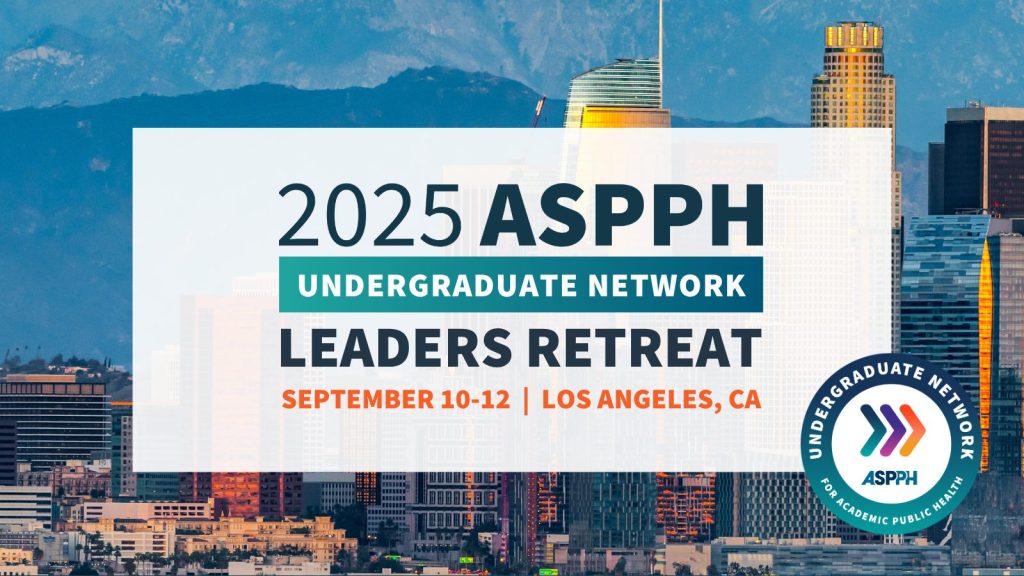
The ASPPH Undergraduate Network grew to include five new institutions, expanding access to undergraduate public health education nationwide. The 2025 Leaders Retreat at UCLA fostered collaboration and innovation among educators and program directors, while the upcoming PHEED Grant Program will fund cutting-edge curriculum design and partnerships that prepare students for meaningful careers in public health.
Driving Innovation in Education for Public Health
ASPPH’s leadership in Interprofessional Education (IPEC) advanced collaboration across the health professions, while our five formal CEPH accreditation responses and Framing the Future 2030 initiatives continue to shape the future of public health education. The new Faculty Forum, launched in early 2025, provided a dynamic platform for sharing resources, strengthening pedagogy, and fostering a connected academic community.

Empowering Leadership and Deepening Member Engagement
The ASPPH 2025 Annual Meeting, Leadership Conversations, and Academic Public Health Leadership Institute (APHLI) provided transformative spaces for professional growth and connection. Through retreats, sections, and advisory committees, ASPPH strengthened engagement across institutions, culminating in Renewing the Vision for Academic Public Health, a member-driven roadmap to accelerate our Strategic Plan 2030.

Celebrating Excellence in Academic Public Health
Each year, ASPPH honors the educators, researchers, and practitioners who elevate our field. The 2025 Awardees—including recipients of the Welch–Rose Awards, Harrison C. Spencer Award, and Riegelman Award—embody the creativity, excellence, and impact that define academic public health. Their contributions inspire continued innovation and leadership across the global community.

Be the Leading Voice and Authority on Academic Public Health
ASPPH remained the trusted national voice for academic public health, informing public dialogue, influencing policy, and advocating for investment in the future of our field. Through bold communications and strategic advocacy, we ensured that public health’s story was told and heard.
Marketing and Communications
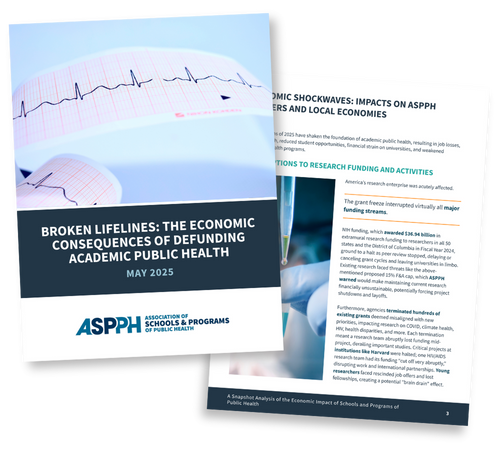
Numerous campaigns amplified our collective voice, inspiring action and awareness. ASPPH also launched the revised Academic Public Health Messaging Guide, Public Health Stories, and a new ASPPH Identity Video, while expanding engagement across major platforms. The release of Broken Lifelines: The Economic Consequences of Defunding Academic Public Health garnered national coverage, reinforcing ASPPH’s authority and credibility in the national conversation.
Advocating for Academic Public Health in a Time of Uncertainty
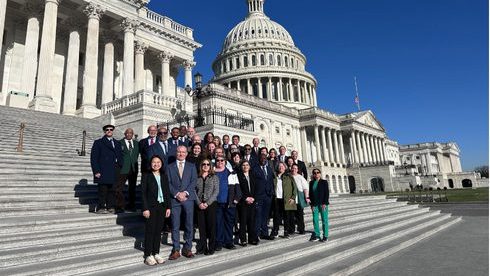
From mobilizing members through Hill Days to testifying before Congress, ASPPH’s advocacy efforts defended science, education, and the future of the field. We celebrated victories, including the court reversal of NIH’s proposed F&A cap, and led efforts to protect public health funding and academic freedom. Through sustained collaboration with policymakers and coalitions, ASPPH ensured academic public health remained at the forefront of national health policy.
Position ASPPH for Long-Term Success and Sustainability
In 2025, ASPPH strengthened its operational foundation to sustain long-term impact. Through modernized infrastructure, new partnerships, and expanded staff capacity, we built a resilient organization ready to meet the moment.

Development and Fundraising
ASPPH launched a tiered sponsorship model, which boosted collaboration and resulted in a 216% increase in Annual Meeting sponsorships. New partnerships with the de Beaumont Foundation and Amazon Web Services expanded mission-driven innovation in infodemiology and equitable AI. These efforts ensure ASPPH remains financially strong and strategically positioned to support members and the public health community.

Modernizing Data, Technology, and Member Services
With the full integration of Institutional Research into MyASPPH, members can now access enhanced dashboards and data tools that support benchmarking and strategic planning. ASPPH also expanded the IDEA Institute digital ecosystem, launching ARIE and the ARIE Resource Library, and introducing My Discussions, a collaborative space for resource sharing and engagement. Together, these tools make ASPPH a leader in digital transformation across higher education.

Enhancing IT Operations to Power Innovation
From hosting the AWS Amazon Q Developer Immersion Day to launching ChatGPT Enterprise across teams, ASPPH strengthened its IT operations to power efficiency and creativity. These investments reinforce our commitment to ethical, mission-aligned technology that supports internal excellence and serves as a model for the field.

Expanding Our Team to Meet the Moment
ASPPH welcomed Chief Operating Officer Ariel C. Moyer and 11 new staff members, expanding organizational expertise and capacity. This growth reflects our long-term investment in people—the driving force behind ASPPH’s progress, leadership, and innovation.
Looking Ahead
ASPPH’s FY2025 story is one of perseverance, partnership, and progress, but the strength of ASPPH truly lies in our shared mission and collective action. From classrooms to Congress, from rural communities to global coalitions, our members led with purpose. Our partnerships deepened, our voices amplified, and our vision of a healthier, more equitable world remained clear.
Together with our members and partners, we confronted complex challenges and emerged stronger, guided by science, grounded in equity, and inspired by the power of academic public health to shape a healthier, more just world.