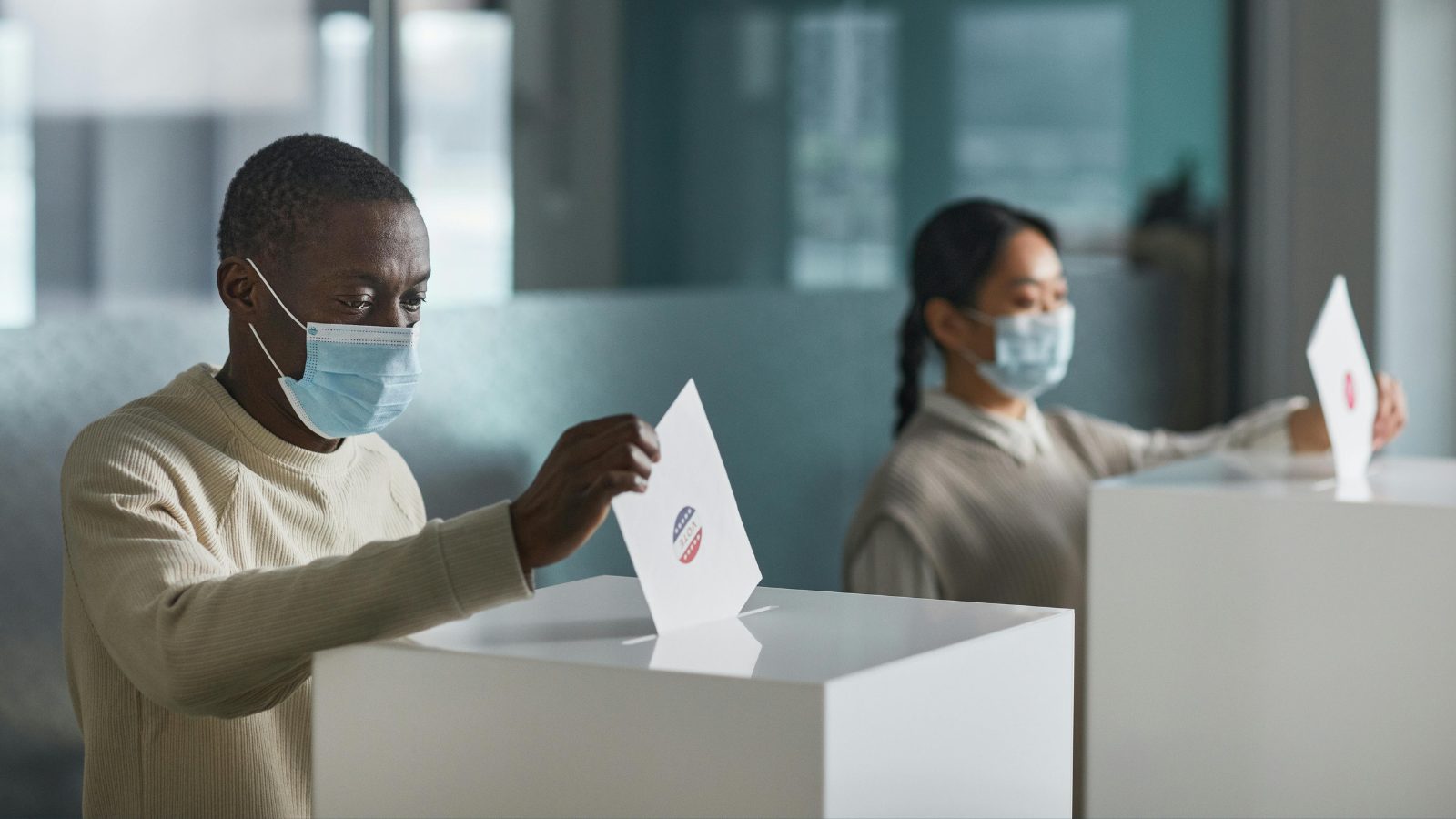
In the past few years, there has been a trend—both internationally and nationally—toward authoritarianism, oligarchy, and anti-intellectualism. This shift may seem too large and unwieldy to oppose, but I believe each of us has the capability to promote democracy in small but meaningful ways.
When you encourage thoughtful engagement in the political process, when you support informed decision-making, when you promote science, and when you promote healthy choices, you are participating in and advancing democracy and health.
One could argue that democracy isn’t necessary for public health to exist. Cuba, for instance, is an example of a successful public health system in an authoritarian state, but we know that people who live in democracies are healthier. Political freedom and health enjoy a symbiotic relationship. Democracy supports health, while health bolsters political freedom.
Public health furthers civic participation, increases trust and accountability in government, works to eradicate health disparities, increases social equity, and helps truth triumph over disinformation.
When you promote public health, you promote democracy.
Recently, public health has faced significant backlash. In addition to the criticisms leveled at us over our handling of the pandemic, we are dealing with budget cuts, an onslaught of mis and disinformation, and skepticism of science. As if those challenges are not enough, it turns out that we are the victims of our own success with vaccines. People no longer see the ravages of diseases like polio that killed and maimed millions.
When I was a child, the reminders were everywhere: I would see polio survivors in the grocery store with braces on their legs and stacked, orthopedic shoes, struggling and hobbling to walk. It was horrible, but it served as a reminder that polio was real and dangerous. Thanks to the tireless efforts of the public health workers who came before us, you no longer see people in the United States with limbs twisted by polio, because it has largely been eradicated here. The unforeseeable consequence of that incredible scientific victory and others like it is that polio and many other preventable diseases are now invisible. This lack of physical reminders paired with mis and disinformation about vaccines has created a recipe for disaster.
But let’s take a moment to remember who we are. We are public health. We are used to uphill battles. We have previously experienced a lack of funding, workforce shortages, political opposition, an onslaught of mis and disinformation, emerging diseases, chronic shortages, and rampant skepticism. None of this is new to us. Those of us in public health are strong. We are resilient. We are endlessly resourceful. Remember that Paul Farmer saved countless lives with donated supplies, a shoestring budget, and a single crumpled suit. He was public health. We are public health.
Now let’s talk about how we can not only survive but succeed in this challenging environment. We cannot be complacent. We cannot assume that our presence individually or in the form of institutions is enough. We cannot wait and hope that things will change. Each of us must be an agent for change. We must take action to address the underlying inequities in society. We must take on the politicians and legislation that are working to dismantle science, public health, and democracy. We must push back on those who denigrate science and cut our funding as we forge forward.
Public health is a noun, but let’s try to think of it as a verb. Like democracy, public health requires our participation, thoughts, and actions. Without our involvement, without our active presence, public health, like democracy, will languish.
Understanding the New Leadership Dynamic in Washington
Since the elections there has already been a great deal of change that requires some new approaches by the public health community. The Republicans have achieved the trifecta of controlling the White House, House of Representatives, and the Senate. During his inauguration address, President Trump discussed public health, outlining his plans to reverse Biden-era initiatives and advance his campaign promises of “Make America Healthy Again.” Trump stated, “We have a public health system that does not deliver in times of disaster, yet more money is spent on it than any country anywhere in the world.” He also pledged to “end the chronic disease epidemic and keep our children safe, healthy, and disease-free.” On the same day, he signed several executive orders that impacted public health:
- Leaving the World Health Organization (WHO)
- Dropping out of the Paris Climate Agreement
- Terminating diversity, equity, and inclusion (DEI) programs in the federal government
- Revoking President Biden’s Executive Order, Protecting Public Health and the Environment and Restoring Science to Tackle the Climate Crisis
- Creating the Department of Government Efficiency, (DOGE), which is focused on cutting federal funding
President Trump has also nominated people to health agencies who are eager to disrupt the status quo. For instance, he appointed Robert F. Kennedy, Jr. (RFK Jr.) as Secretary of Health and Human Services, who:
- Has stated that Americans have been “mass poisoned by big pharma and big food,” and federal agencies have failed to stop it
- Views federal agencies as “institutions of corruption.”
- Promotes alternatives to drugs and believes vaccines are dangerous
- Plans to change the focus from infectious disease to chronic disease
- Wants to eliminate chemicals from American food and ban processed foods
RFK Jr’s nomination passed out of the Finance Committee and he will be confirmed along several other agency heads who have very different views of public health than those in the Biden Administration.
Expect major changes at the research funding agencies like the NIH and CDC:
Congress has developed plans to reorganize the National Institutes of Health (NIH), and there has been talk of breaking up the Centers for Disease Control and Prevention (CDC). There is a healthy skepticism of science in the Trump Administration, especially when viewed in the wake of the COVID-19 pandemic and for that reason, the new Administration will focus on chronic disease and less on infectious disease intervention. There will also be attempts to cut federal research funding and focus on investigations and “corruption” at funding agencies. RFK, Jr. has also said he will cut staff at these agencies.
At the same time, public health isn’t at the top of the GOP agenda in Congress either. Instead, they are focused on:
- Extension, modification, and enhancement of the expiring Tax Cut and Jobs Act of 2017, a signature legislative achievement of the first Trump Administration
- Passing the FY 2025 budget and starting to consider FY 2026
- Strengthened border security and enforcement of current law
- Completing construction of the border wall
- Increased defense spending and attempting to cut non-defense discretionary spending
- Increased domestic energy production and export of American energy products
- Reauthorization of the Farm Bill
For those of us in Public Health, there are three ways we can respond.
- Don’t worry too much about it because, in the end, changes to public health are hard to make
- Find ways to work with the new Administration and Congress where there is common ground
- Get ready to fight back against potentially detrimental public health policies
As Jeneen Interlandi discussed in a New York Times piece, Americas have become desensitized to crisis messages after the pandemic. In this post-election, post-pandemic era, we need to listen more, keep reassessing those who oppose public health in the new context, and reframe and readjust. We must finetune our message so it can be received by skeptics. This means talking about the return on investment public health brings over time. For instance, if we invest now in eliminating Hepatitis C, it will save the federal government $6.5 billion over 10 years, according to the Congressional Budget Office. We must also become more comfortable with uncertainty.
How can we in public health proceed?
- Know that politicians expect to hear from their constituents.
- Get to know your elected officials and build a relationship with them.
- Constituents matter when it comes to public policy.
- Don’t assume someone else is speaking up for programs that are your priority.
- Remember, “If you are not at the table, you are on the menu.”
- Without your involvement, without our active presence public health will languish.
- Get involved, make your voice heard.
There is a great scene in the movie “It’s A Wonderful Life” when there is a run on the bank and the protagonist, George Bailey, has to reassure his customers at the Building & Loan. He says, “Can’t you understand what’s happening here? Don’t you see what’s happening? Potter (the villain) isn’t selling. Potter’s buying! And why? Because we’re panicking, and he’s not. That’s why. He’s picking up some bargains.”
In public health, we should follow George’s advice, not panic but remain calm, and find ways to advance public health in this new era—because millions of people are depending on us.