Accessibility isn’t just an educational issue, it’s also a public health necessity. I chose public health as a career because I grew up understanding that health is shaped less by hospitals and more by the systems, environments, and policies that people encounter every day. As a young woman living with Multiple Sclerosis (MS), navigating university life made one thing clear to me: accessibility is a public health issue, and inclusive systems can profoundly change someone’s mental, emotional, and academic well-being. That understanding became the foundation of my two-year MPH journey.
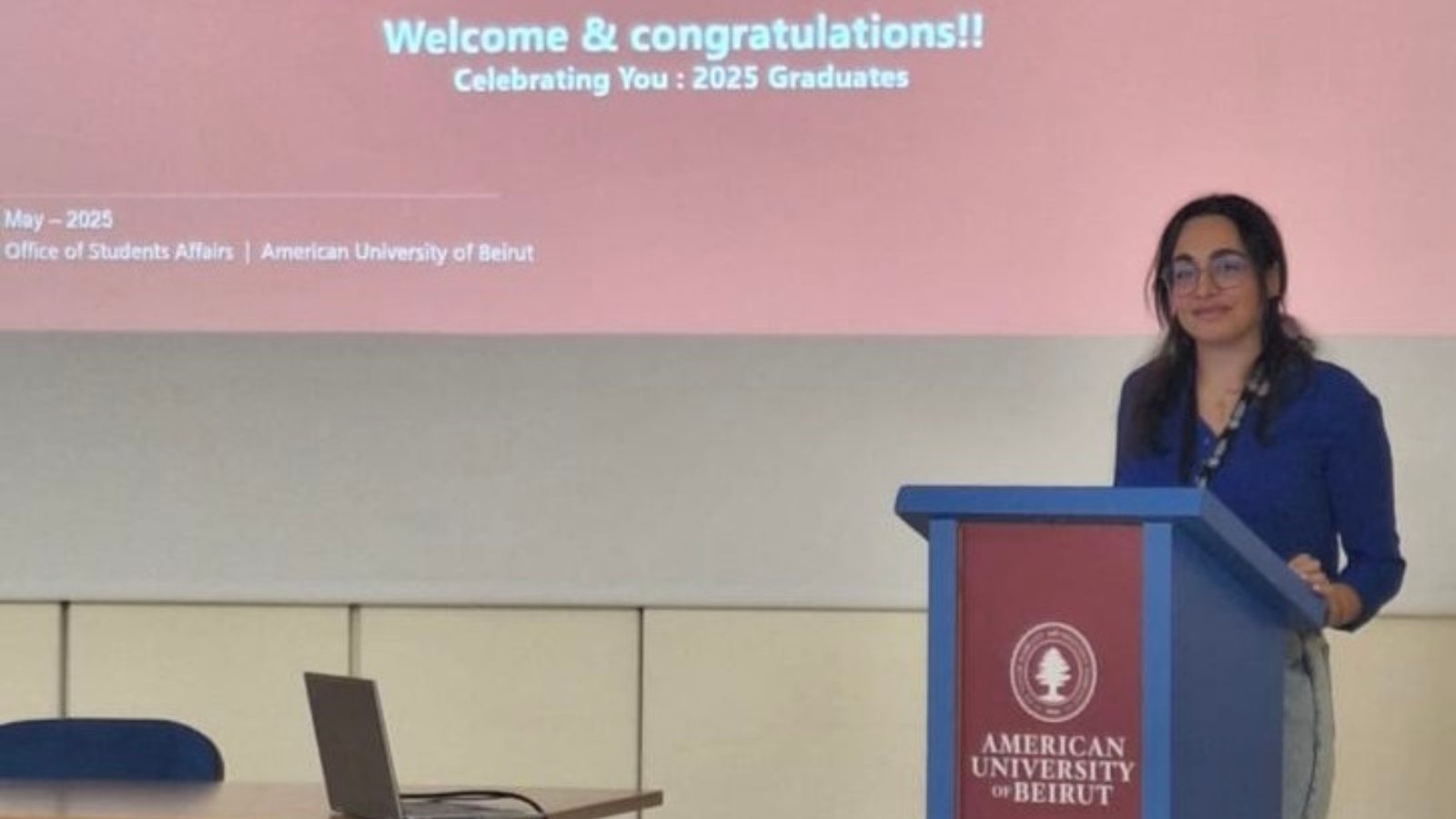
My journey took shape at the American University of Beirut (AUB), where I completed my Master of Public Health with a concentration in Health Management and Policy. In 2023, I began working at AUB’s Accessible Education Office (AEO) as a Graduate Assistant. Over time, I grew into the role of Student Accessibility Advocate, collaborating with students, faculty, and university leadership to advance disability inclusion and equitable education. This was where my public health training came alive: applying health equity, systems thinking, and advocacy to real institutional challenges. One of my most meaningful achievements was leading my Integrative Learning Experience (ILE) , a full mixed-methods research study assessing the impact of academic accommodations on the mental health of Students with Disabilities (SWD) at AUB. My research combined quantitative surveys and qualitative interviews with students with diverse needs, the dean of student affairs, as well as the director and officer of AEO.
My study revealed powerful findings: students who received accommodations reported reduced stress, improved emotional well-being, and stronger academic belonging. This work linked inclusive education directly to the core pillars of public health: prevention, protection, and promotion, and provided evidence for strengthening accessibility policies at AUB.
Beyond research, I worked hands-on with students every day. As an Orientation Leader, I welcomed incoming students with unique disabilities, helping them navigate campus, understand their rights, and find confidence in their educational journey. I also supported the creation of student-facing initiatives including awareness campaigns for different international disability days to promote inclusion and understanding across campus, workshops and trainings.
My story was later featured in a MENASA video presented at an international conference in Abu Dhabi, highlighting AEO as a success story in the region.
This work took place from 2023 to 2025 at AUB in Beirut, Lebanon, but its impact extends far beyond campus. Improving accessibility is a public health intervention: it reduces mental health disparities, strengthens social participation, and promotes long-term equity for a population often overlooked in conversations. Public health is not only about clean water, hygiene, or pollution, it is also about the invisible systems that shape people’s daily lives: whether a student can enter a classroom without fear, whether someone feels included or isolated, whether mental health needs are recognized and supported. It is about creating environments where everyone, regardless of ability, can thrive, participate, and live with dignity. Sometimes, the most powerful public health work is the work we don’t always see, yet it transforms lives just the same.
If I could give advice to my younger self, and to future public health professionals, it would be this: Your lived experience is not a weakness; it can be your purpose. Use it to inform your work, push systems to be better, and never underestimate the power of small changes in people’s daily lives. Public health is everywhere, and your impact can start right where you are.